

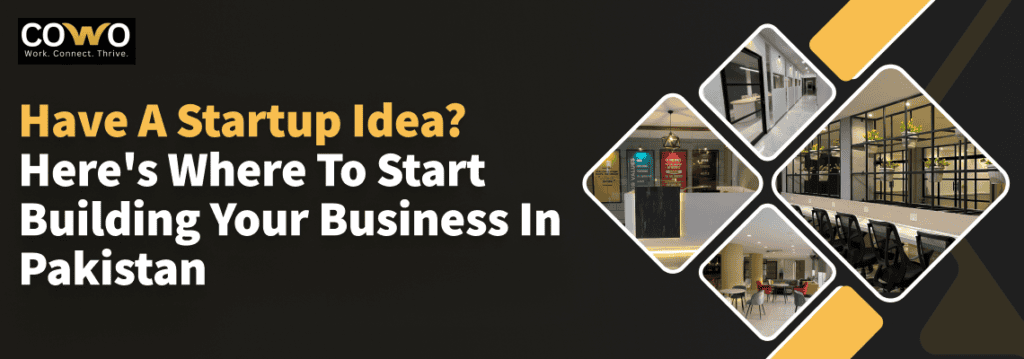
Have a Startup Idea? Here’s Where to Start Building Your Business in Pakistan
Two friends in Lahore want to start a digital marketing agency. They have laptops and a few ideas for finding clients. What they don’t have is a big budget or an office. One thinks they should rent a place to look professional. The other wants to find paying customers first. Many people starting out face this same choice.
If you are wondering where to start a business in Pakistan, the answer depends on what you are building. A software company, design studio, or consulting service can often begin from home or a shared workspace. You do not need to spend your savings on furniture and a long lease. You need a simple plan, people who want your service, and a place where you can work well.
Find Out Whether Someone Will Pay for Your Idea
Before you choose a name or a desk, talk to the people you hope will become your customers. A graphic designer planning an agency could ask local clothing sellers how they make product photos. A developer could ask shop owners what goes wrong with their online orders.
Ask what they do today, not whether they like your idea. What takes too long? What costs too much? Have they already paid someone to fix it? Real stories help more than praise from friends.
Then offer one small paid project, such as a single campaign or a redesigned product page. Do it well and ask what worked. One paying customer does not prove the whole business, but it is a better start than guessing.
Choose a Business That Fits a Shared Workspace
A coworking space for startups works best when the main work happens at a desk. It looks different for each business:
Software and web development: A small team can build websites and apps with laptops and online tools. Focused work and private client calls matter more than a big reception area.
Marketing and creative services: Designers, content writers, video editors and social media managers can work from shared desks. They may need meeting rooms for presentations or quiet spaces for recording and calls.
Consulting and recruitment: These teams often need a professional place to meet people. They should also check privacy and any professional rules that apply.
E-commerce operations: Online sellers can manage their websites, advertising, customer messages and supplier relationships from a workspace. Stock storage and packing will usually need a separate suitable location.
A restaurant kitchen, manufacturing unit or walk-in retail shop has different requirements. A shared desk cannot replace the facilities those businesses need.
Check Your Market Before Spending Much
Customers are not the same in every Pakistani city. A marketing service for restaurants in Lahore may sell differently from a development service for overseas clients. Focus on a specific customer, not a trendy category.
Look at competitors and read genuine customer reviews. Notice what their customers complain about and what they are happy to pay for. Compare offers and prices without assuming a cheaper service will always win.
Try talking to 10 potential customers as an initial research exercise. This is a suggested starting target, not a scientific sample or a national benchmark. If you get unclear answers, speak to more people and adjust your questions. A short survey can help, but direct conversations often reveal things a multiple-choice form misses.
Pakistan also has organized support for entrepreneurs. Ignite’s Study for Assessment of Pakistan’s Startup Ecosystem describes the role of National Incubation Centers in giving founders access to events, learning opportunities and professional communities. These resources may help you understand the local startup environment, though joining a program is not necessary to start a small business.
Work Out What You Can Afford Each Month
Make a budget based on the way your business will operate. List one-time purchases such as a laptop or other equipment separately from bills that return every month. These might include software, internet, transport, outsourced help, marketing and workspace fees.
Suppose a small agency has fixed monthly costs of Rs. 90,000. After paying the direct cost of each project, it keeps Rs. 30,000 per project. It needs three projects to cover those fixed costs. This is only a calculation example, not a typical startup cost in Pakistan. Taxes and any expenses left out of the estimate would change the result.
Also think about when clients will pay you. A profitable project on paper won’t cover next week’s bills if the payment arrives late. Keep expenses flexible where you can and set aside a buffer before taking on long commitments.
Where to Start a Business in Pakistan: Home, Coworking or a Private Office?
Working from home can be sensible when you are alone and testing whether your offer sells. You save on workspace costs and commuting. But home isn’t ideal for everybody. Family interruptions, unstable internet or difficulty taking client calls can affect the workday.
A private office gives you more control over who enters and how the space is arranged. It can also mean paying for rent, furniture, electricity, internet and maintenance even when business is slow. That may be worthwhile for an established team but excessive for two founders with no regular clients.
Coworking sits between those choices. A shared workspace may offer desks, internet and meeting rooms without requiring you to set everything up yourself. Membership arrangements differ. Some spaces have daily passes while others offer monthly desks or private rooms. Confirm what is actually included.
The question is not which option looks more impressive. It’s whether the setup lets you deliver work reliably without putting unnecessary pressure on your budget.
How to Choose a Coworking Space That Works for You
Visit before committing. A beautiful photo won’t tell you whether video calls drop when every desk is occupied. Check internet quality during busy hours and ask what happens during electricity outages. If you regularly talk to clients, find out where those calls can happen without disturbing others.
Think about the commute too. A cheaper desk across the city may cost you time and transport money every day. Ask about parking, building access, guest visits and meeting room bookings. Look closely at deposits, notice periods and extra charges.
If you are comparing a coworking space in Lahore, ask whether the facilities match your actual work. A solo designer might need a quiet desk. A two-person agency may need room for collaborative calls. A consultant may care more about private meeting facilities.
Check whether the provider permits business correspondence at its address. Do not assume a coworking membership gives you an address accepted for company or tax registration. The provider’s rules and the relevant authority’s documentation requirements both matter.
What the First Few Months Could Look Like
Return to the two friends starting a marketing agency. During the first month, they speak to restaurant owners and online retailers. They offer a small social media package and get two paying clients. They work from shared desks several days a week and meet customers when needed.
By the second month they know how long each campaign takes. They discover that client revisions use more time than expected, so they improve their proposals and agree on clear deliverables before work begins.
When another project arrives, they hire a freelance editor for a specific assignment rather than immediately bringing in a full-time employee. They consider extra desks only when work becomes consistent. Their workspace changes with the business instead of determining its size from day one.
This is a hypothetical example. The point isn’t that every agency will get clients quickly. It’s that small decisions based on actual work can prevent expensive mistakes.
Handle Registration and Taxes Properly
Different business structures have different requirements. If you work alone, you may operate as a sole proprietor while meeting the applicable registration and tax obligations. If you want a separate company, Securities and Exchange Commission of Pakistan (SECP) rules allow one person to form a Single Member Company. A private limited company generally requires two or more members. SECP provides digital company incorporation through its eZfile system.
The Federal Board of Revenue (FBR) says an individual’s 13-digit CNIC serves as the income tax registration number. Companies and associations of persons receive a 7-digit NTN through enrollment. FBR also asks for a business address when applicable. The documents you need depend on the kind of registration.
Some services have additional provincial tax or licensing requirements. Using a coworking space does not remove them. Before you start taking regular payments or entering contracts, check the current instructions from SECP and FBR or consult a qualified adviser.
Find Your First Customers and Build Useful Connections
A desk in a busy space won’t automatically bring clients. Create a simple portfolio showing what you can do. If you haven’t had a customer yet, make honest sample projects and clearly label them as examples.
Contact businesses whose problems you understand. Instead of a general message offering every digital service, explain one improvement you can help them make. Keep the offer clear and follow up professionally.
People working nearby may know a good freelancer, supplier or prospective customer. Introduce yourself and learn about their work without treating every conversation as a pitch. Useful relationships develop through trust and reliable work, not just exchanging business cards.
A Practical Plan for Your First 30 Days
In week one, define one customer group and speak to people in it. Write down the problems they actually face. In week two, shape a simple paid offer and estimate the cost of delivering it. Decide what workspace you need now, not what you might need a year from now.
During week three, prepare a basic portfolio or landing page and approach potential clients. Check the legal requirements relevant to your activity before trading. In week four, review the responses, money spent and work completed. Improve the offer based on what you have learned.
You may not get a customer in your first month. That’s not a reason to rent a bigger office or build more features. It’s a reason to check the offer and keep learning.
Frequently Asked Questions
Can I start a company from a coworking space in Pakistan?
Many software, marketing, design and consulting businesses can work from shared offices. Registration and licensing still depend on the activity and the documents accepted by the authorities.
Is a coworking desk cheaper than renting an office?
It can be for a solo founder or small team because facilities are shared. Compare the complete monthly cost instead of assuming it will always be cheaper.
Do I need a dedicated office to register my business?
Not always. You do need to meet the applicable address and documentation requirements. Confirm what your workspace provider permits and what the authorities accept.
Can an online store operate from coworking?
Yes, its marketing and administrative work may fit well. Storage, packing and dispatch may need a different location.
Start With Your First Customer, Then Choose the Space to Grow
You don’t need to wait until you can afford a full office to take a business idea seriously. Talk to potential customers, test a service and work out the costs before committing to a permanent setup. If you need a professional place to focus and meet people, coworking may be a practical option. If home works well for now, there’s no need to move just for appearances.
Your next step could be as simple as arranging three customer conversations this week and calculating what one paid project would cost to deliver. Once you understand the work, choosing the right workspace becomes a much easier decision.