

Why Businesses Are Choosing Flexible Workspaces Over Traditional Offices (2026)
Something fundamental has shifted in the way businesses think about office space. As recently as 2019, the conventional wisdom was straightforward: if you were a serious company, you leased a traditional office. You signed a multi-year contract, furnished the space, paid for utilities, hired admin staff, and accepted the overhead as the cost of doing business.
That model is now being challenged everywhere, including here in Pakistan.
In 2026, a growing number of companies across industries and sizes are making a deliberate choice to move toward flexible workspaces. Some are scaling startups. Others are established businesses looking to cut costs without cutting productivity.
And many are companies that have realized their employees simply work better in a well-designed shared environment than in a sterile, fixed office they are locked into for years.
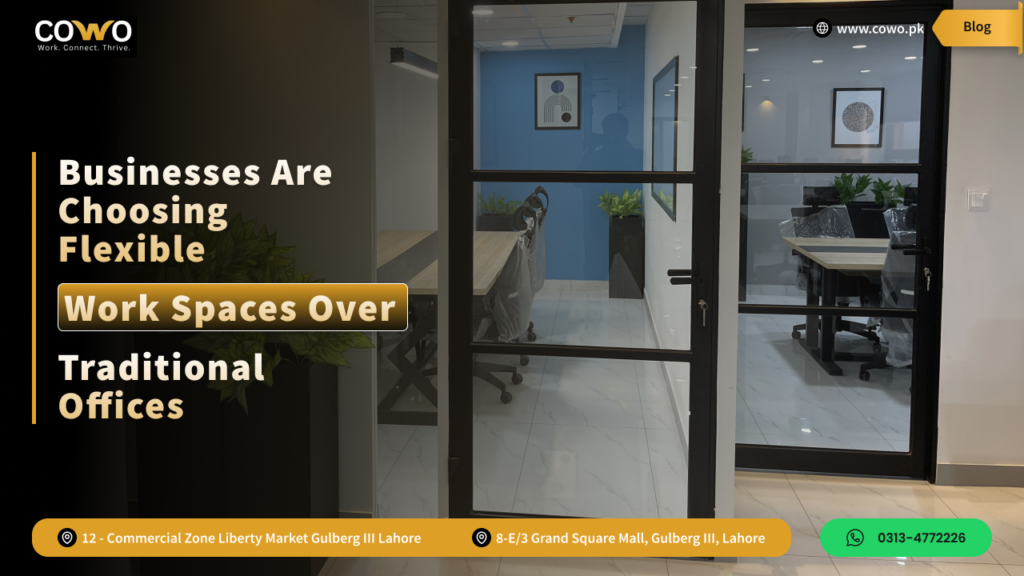
This article looks at the real reasons behind this shift, what flexible workspaces actually offer, and why the economics and culture of work have made this transition increasingly logical for businesses in Lahore and beyond.
The Financial Case Against Traditional Offices
Traditional office leasing is expensive in ways that are not always obvious when you first sign the contract. The base rent is just the beginning. Add to it security deposits, interior fit-out costs, monthly utility bills, internet infrastructure, cleaning services, and the salaries of administrative staff who manage the space. Then factor in the rigidity of a 3 to 5 year lease in a market where business conditions can change dramatically in 12 months.
For a startup or a small business, this kind of financial commitment represents a serious risk. You are locking yourself into a fixed cost structure at the exact moment when flexibility is most valuable. If you grow faster than expected, you are stuck in a space that is too small. If growth slows or pivots are needed, you are still paying for square footage you no longer need.
Flexible workspaces solve this problem at the root. A coworking membership or a managed private office lets you pay for exactly what you use, scale up or down with relatively short notice, and redirect the capital you would have spent on deposits and fit-out costs into actual business growth. For many companies, the math is simply not close.
What Businesses Actually Get From Flexible Workspaces
The term flexible workspace covers a spectrum of options, each suited to different business sizes and working styles. Understanding what is available helps explain why so many companies find the model appealing.
Hot desks and coworking seats are ideal for freelancers, remote employees, and solo founders who need a professional environment on a flexible basis. A coworking space in Lahore offers hot seats starting from PKR 20,000 per month and day passes at PKR 3,000, making it easy to access quality infrastructure without a long-term commitment.
Dedicated desks give you your own assigned workstation within a shared environment. You get the social energy and infrastructure of a coworking space with the consistency of knowing your seat is always there.
Private offices are lockable, secure rooms within a managed workspace building. They are ideal for small to medium teams that need privacy for client calls, sensitive work, or a team culture that benefits from physical separation from the broader coworking floor. Private office plans start from PKR 23,000 per seat per month, which is significantly more cost-effective than a standalone traditional office when you factor in all the services included.
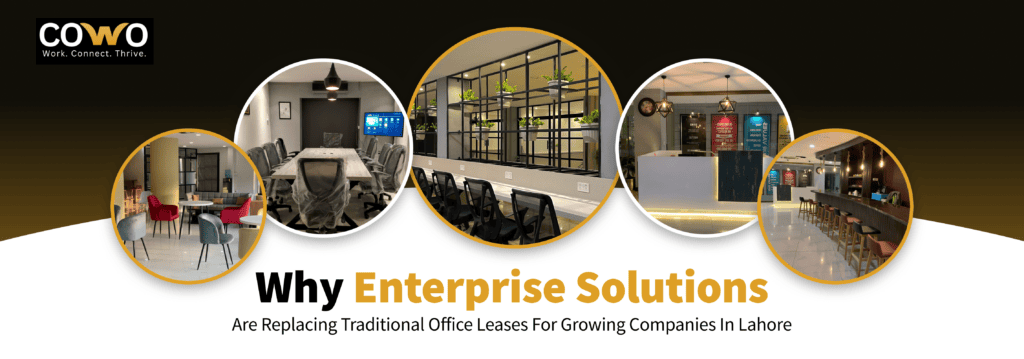
Enterprise solutions are for companies that need entire floors or large dedicated spaces within a professionally managed building. Rather than leasing raw commercial space and building it out from scratch, businesses opt for a turnkey setup that is ready to use from day one. Enterprise workspace providers handle the furniture, internet, cleaning, security, and management so the company can focus entirely on its own operations.
The Productivity Factor
One of the most important reasons companies are choosing flexible workspaces in 2026 is the growing body of evidence that people work better in well-designed shared environments compared to traditional corporate offices.
A traditional office, particularly one built to cut costs, often ends up being a sterile, poorly lit, acoustically uncomfortable space with poor ventilation and minimal amenities. Employees may show up physically but disengage mentally. Productivity suffers, and the company still pays the full cost of the space.
A quality coworking space, by contrast, is designed specifically to enable focused work. Good internet and power backup eliminate common frustrations. Comfortable seating and ergonomic design reduce fatigue. Breakout areas give people space to decompress. Coffee and food within the building reduce the need to step out. And the presence of other professionals working hard around you creates a productive social energy that is genuinely difficult to replicate in an isolated office or a home environment.
Members at COWO have specifically noted how the atmosphere helps them maintain focus and stay motivated throughout the day. That kind of qualitative feedback is consistent with what coworking research globally has found: people in well-designed shared spaces report higher job satisfaction and output than those in traditional assigned offices.
The Networking and Community Advantage
Traditional offices create silos. Your team interacts with each other but has minimal organic exposure to people outside your organization. Coworking spaces break down those walls in a way that has genuine business value.
When you work alongside developers, marketers, consultants, designers, finance professionals, and founders from different industries every day, opportunities emerge naturally. A casual conversation over coffee leads to a collaboration. A freelancer in the next seat refers a client to your business. An event hosted by the space introduces you to an investor or a potential hire you would never have met in a closed office environment.
This kind of ambient networking is one of the most underrated benefits of shared workspaces. The community around spaces like COWO Liberty and COWO Center Point in Gulberg includes professionals from companies like Bazaar, Oman Insurance, ML Sense, Code Graphers, and MentorPak, which reflects the breadth of industry exposure available when you work in a genuinely active coworking environment.
Flexibility as a Talent Advantage
In the current job market, where skilled professionals in Pakistan increasingly have options including remote positions with international companies, the flexibility and quality of the work environment matters when it comes to attracting and retaining people.
A company that offers its team access to a well-designed, professionally managed workspace in a central location like Gulberg, without the rigid structure of a traditional 9-to-5 fixed desk environment, is a more attractive employer. Employees appreciate the amenities, the professional atmosphere, the central location, and the community. These are real factors in job satisfaction and retention.
Startups and SMEs that cannot afford to match the salaries of larger corporations can compete on culture, environment, and flexibility. A quality coworking space helps them do exactly that.
Why 2026 Is a Turning Point for Flexible Workspaces in Pakistan
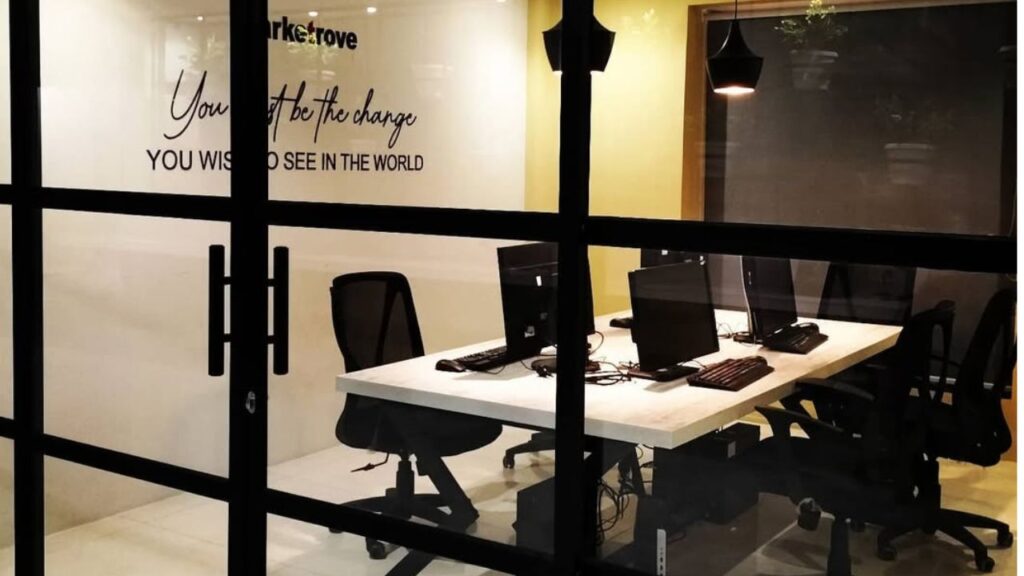
Several converging factors are making 2026 a particularly significant year for the flexible workspace industry in Pakistan. Commercial real estate costs in Lahore have continued to rise, making traditional office leasing even more financially demanding for small and mid-sized businesses. At the same time, the freelance economy has grown substantially, creating a large and sustained demand for professional shared workspace options.
Remote work culture, normalized during the pandemic years and now embedded in many company policies, has also driven demand. Teams that were once fully in-office have become hybrid, and coworking spaces fill the gap for employees who need a professional environment without a full-time traditional office commitment from the company.
The supply side has also matured. Spaces have invested in infrastructure, community programming, and facility management to a level that meets the expectations of professional and enterprise clients. The days of coworking meaning a cramped room with shaky WiFi are long gone. Modern shared workspaces in Gulberg Lahore are genuinely premium environments that compare favorably to well-resourced traditional offices.
Making the Switch: What to Consider
If you are a business owner or decision-maker evaluating whether to move from a traditional office to a flexible workspace arrangement, here are the key questions to work through.
Team size and growth trajectory:
How many seats do you need now and how many might you need in 6 to 12 months? Flexible workspaces let you add or reduce seats without the friction of a new lease or renovation.
Privacy requirements:
If your team handles sensitive client data or confidential projects, a dedicated private office within a managed building gives you security without the full cost of a standalone space.
Client-facing needs:
Do you meet clients at your office regularly? If so, location and the professional quality of meeting rooms matter. A central Gulberg address with well-equipped meeting rooms handles this without any additional investment.
Employee preferences:
Have you asked your team what they actually want? The answer might surprise you. Many employees prefer a well-designed shared workspace with good amenities over a traditional assigned desk in a dated office.
Conclusion
The shift from traditional offices to flexible workspaces is not a trend driven by cost-cutting alone. It is a deeper recognition that how people work has changed, and the physical environment they work in needs to change with it. In 2026, the most competitive and forward-thinking businesses are the ones that prioritize the quality of their team’s working environment, the flexibility of their real estate commitments, and the professional community their people are exposed to every day.
For businesses in Lahore, particularly those based in or near Gulberg, the coworking options available today make this transition practical, affordable, and genuinely beneficial. Whether you are a freelancer, a growing startup, or an established company looking for a smarter way to manage office overhead, flexible workspaces have become the intelligent default for 2026 and beyond.