


How International Companies Can Set Up and Manage an Office in Pakistan Without a Local Operations Team
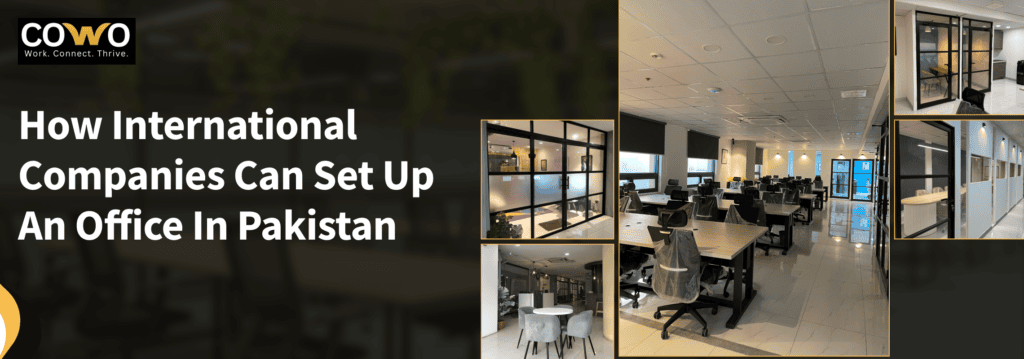
Opening an office in Pakistan from another country can look complicated at first. The company may be ready to hire people, meet clients, or build a long-term presence, but it may not be ready to create a separate local department for facilities, administration, IT coordination, payroll, and vendor management.
That creates a practical challenge. Someone still has to arrange the workplace, keep the internet running, coordinate employee onboarding, manage invoices, deal with service providers, maintain records, and make sure local requirements are not overlooked.
The solution is not necessarily to hire an operations team before the business has even established itself. International companies can separate the tasks that require internal control from the tasks that can be handled through local specialists and managed service providers.
Headquarters can continue controlling strategy, hiring decisions, budgets, performance, and company policies while local legal, tax, HR, workplace, and technical support handles the activities that require an on-the-ground presence.
The important part is setting up that structure properly from the beginning.
Start With the Right Legal Structure in Pakistan
Before choosing an office, signing a workplace agreement, or hiring employees, an international company needs to understand what type of legal presence fits its planned activities in Pakistan.
This decision matters because a branch office, liaison office, and locally incorporated company do not serve exactly the same purpose.
According to Pakistan’s Board of Investment (BOI), a branch office of a foreign company is generally established to fulfill contractual obligations with a public or private sector organization in Pakistan. Its activities are restricted to the work covered by that contract, and it cannot undertake unrelated commercial or trading activities.
A liaison office has a narrower role. The BOI identifies activities such as promoting products, providing technical advice and assistance, exploring possible collaborations, and supporting export promotion. A liaison office is not permitted to carry out commercial or trading activities.
A foreign business that intends to conduct broader commercial activities may need to consider an incorporated Pakistani entity instead of assuming that a branch or liaison office will be suitable.
This is one area where headquarters should make the strategic decision with advice from qualified Pakistani corporate and tax professionals. The legal structure affects what the business can do, how it registers, and what obligations follow afterward.
Complete BOI and SECP Requirements Before Operations Begin
Once a foreign company decides to establish a branch or liaison office, there are formal approval and registration steps to complete.
The Securities and Exchange Commission of Pakistan (SECP) states that a foreign company wishing to establish a place of business in Pakistan through a branch or liaison office needs to register with the SECP. Its published procedure also explains that permission from the Board of Investment is part of the process.
The BOI’s current branch and liaison office system lists documents that may include:
- Certificate of incorporation or registration: The foreign company’s registration document may need to be properly attested by the relevant Pakistani embassy, high commission, or consulate.
- Corporate constitutional documents: Documents such as the memorandum and articles of association are part of the supporting documentation required for the application.
- Board resolution or authority letter: The foreign company must formally authorize the establishment of the Pakistan office and identify the person who will act on its behalf.
- Company profile and identification documents: Information about the foreign company and the designated representative is required.
- Contract agreement for a branch office: A branch application requires the contract connected with the company’s activities in Pakistan.
The BOI states that permission for branch and liaison offices can be issued for a period of 1 to 5 years, with renewal subject to the required documentation and applicable conditions.
For an overseas management team, the practical lesson is simple. Do not leave regulatory paperwork until the office is already functioning. Corporate registration, permissions, tax arrangements, banking requirements, employment planning, and the physical workplace should be treated as connected parts of the same setup project.
Organize Tax Registration and Local Financial Administration
A Pakistan office also creates tax and financial administration responsibilities.
The Federal Board of Revenue (FBR) lists specific information required when a non-resident company with a permanent establishment in Pakistan registers for income tax. This includes its business address, accounting period, principal business activity, branch registration details with the SECP, and information about its principal officer or authorized representative.
That does not mean an international company needs to move its finance function to Pakistan.
Headquarters can continue controlling budgets, reporting standards, payment policies, and financial approvals. Local accountants or tax professionals can support the parts that require knowledge of Pakistani registration, filing, payroll, and tax procedures.
The key is to establish the reporting structure before transactions begin to accumulate.
Decide who approves local spending, who receives invoices, where supporting documents are stored, how expenses are reported to headquarters, and who is responsible for statutory filings.
A simple process set up early is much easier to manage than trying to reconstruct months of records later.
Choose an Office That Reduces Day-to-Day Administration
A traditional commercial office can create far more work than the lease itself suggests.
After acquiring a space, the company may still need to arrange furniture, internet connections, backup connectivity, cleaning, electricity arrangements, repairs, security, reception, access controls, meeting rooms, office supplies, and relationships with several different vendors.
If no local operations team exists, those small responsibilities can quickly become a problem for managers sitting in another country.
This is where the type of office matters as much as its address.
Using managed office solutions in Lahore can reduce the amount of routine workplace administration that headquarters needs to coordinate directly. A managed setup can bring several operational requirements under one arrangement rather than forcing the company to create a separate vendor relationship for every part of the workplace.
That does not remove management responsibility. It allows management to focus on the things that actually need internal attention, such as hiring, performance, budgets, client delivery, security policies, and business growth.
Build Reliable IT and Communication Systems From Day One
When headquarters and the Pakistan team are separated by geography, the technology setup becomes part of the operating model.
A slow or unreliable connection is not simply an office inconvenience. It can interrupt meetings, access to cloud systems, customer support, software development, reporting, and collaboration with international teams.
Before employees move into the office, confirm how connectivity is provided and what happens if the primary connection fails.
The same planning should cover employee equipment and system access.
Every new employee should have a clear process for receiving company-approved devices, email accounts, software access, authentication tools, and permissions. The company should also know who handles a damaged laptop, a failed login, a network problem, or another technical issue locally.
Cybersecurity should be built into this setup rather than added later. Company-managed devices, multi-factor authentication, appropriate access controls, secure cloud storage, regular software updates, and documented offboarding procedures can help reduce avoidable risk.
Most importantly, employees should know exactly who to contact when something goes wrong.
Create a Pakistan-Specific Hiring and Onboarding Process
Hiring employees without a local operations department is possible, but using the headquarters employment process without local review can create problems.
Employment requirements in Pakistan can depend on factors including the location of the office, the nature of the establishment, the employee’s role, and applicable federal or provincial rules.
An international company should therefore have local HR or employment-law professionals review its employment contracts, payroll process, working arrangements, leave policies, statutory registrations, benefits obligations, and termination procedures where applicable.
Headquarters can still make the decisions that matter most.
It can determine which roles to hire, who reports to whom, what skills are required, how performance is measured, and how compensation fits the company’s wider structure. Local specialists can then help make sure the administrative side of employment reflects Pakistani requirements.
Onboarding should also be consistent.
Before an employee’s first day, the company should know who prepares the employment documentation, who arranges access to the office, who provides equipment, who creates system accounts, and who explains local administrative procedures.
That prevents new employees from becoming the people who have to solve the company’s setup problems themselves.
Assign Clear Ownership Without Building an Operations Department
Operating without a local operations team does not mean operating without an owner for operational issues.
Someone at headquarters should have clear responsibility for the Pakistan office. Depending on the company, that person could sit within finance, people operations, administration, regional management, or another corporate function.
Their job does not need to be physically fixing every problem. Their job is to make sure each problem has a defined owner.
For example, employees should know where to report an internet outage, whom to contact about workplace access, where payroll questions go, who approves purchases, and which person handles an urgent facilities issue.
A simple responsibility matrix can make this much easier.
It can cover workplace management, IT support, payroll, employee documentation, accounting, procurement, security, vendor payments, equipment, and emergency contacts.
For every function, identify one responsible person or provider and one escalation contact.
This prevents routine questions from travelling through several managers before reaching the person who can actually solve them.
Keep Local Spending Visible to Headquarters
Remote offices can develop weak financial controls when small expenses are handled casually.
Office supplies, repairs, equipment, employee reimbursements, professional services, transport, internet costs, and other recurring payments may appear minor individually, but they still need a consistent approval and record-keeping process.
International companies should define spending authority before the office becomes busy.
Employees should understand which expenses require advance approval, what evidence must be submitted, who can authorize purchases, and how reimbursement requests are made.
Invoices and receipts should be stored in an agreed system rather than scattered across individual email accounts or messaging apps.
Headquarters should also receive regular reporting on local expenses so management can compare spending with budgets and identify unusual changes.
This level of financial visibility can be maintained without hiring a full local finance department. What matters is having clear controls and qualified support for the accounting and tax work that cannot be handled internally.
Reduce the Number of Vendors Headquarters Has to Manage
Vendor coordination is one of the easiest operational workloads to underestimate.
A conventional office might involve different companies for internet, security, cleaning, maintenance, furniture, printing, repairs, equipment, and other services. Every supplier adds another contact, service agreement, invoice, payment, and potential problem.
For a company managing Pakistan remotely, fewer operational relationships are usually easier to control.
Where individual vendors are still required, set basic expectations from the start. Record the service being provided, agreed pricing, payment terms, main contact, response expectations, and escalation procedure.
Keep this information in a shared company location so that operations do not depend on one employee’s phone or personal contacts.
Vendor performance should also be reviewed periodically. If a supplier repeatedly causes delays or service interruptions, the problem should be visible to the person responsible for the office rather than being accepted as a normal inconvenience by local employees.
Treat Physical and Digital Security as One Responsibility
An international company also needs to know how its office, employees, equipment, and information are protected.
For the physical workplace, review how employees enter the building, how visitors are handled, whether access is controlled outside normal working hours, and what procedures exist for emergencies.
There should also be clarity around company equipment. Employees need to know what happens if a laptop, phone, access card, or other company asset is lost or stolen.
Digital security is closely connected.
Remote teams often access customer information, internal platforms, business documents, financial records, and company communication systems. Access should therefore be based on job requirements rather than giving every employee broad permissions by default.
When an employee leaves, physical access, system permissions, email accounts, and company equipment should be handled through a documented offboarding process.
Good security is not about creating complicated rules. It is about making responsibilities clear enough that employees can follow them consistently.
Create a Regular Management Rhythm With the Pakistan Team
A remote office becomes much easier to manage when communication happens routinely rather than only when there is a problem.
A short weekly operational review can cover hiring, employee issues, IT problems, workplace concerns, upcoming purchases, and decisions that require headquarters approval.
A broader monthly review can look at expenses, vendor performance, compliance deadlines, office capacity, staffing plans, and recurring issues.
This does not need to become another layer of bureaucracy.
The purpose is to make problems visible early.
Recurring processes should also be documented. Employee onboarding, equipment requests, expense approvals, leave administration, visitor access, purchasing, and employee exits should not depend entirely on verbal instructions.
When basic procedures are written down, the Pakistan office can continue operating consistently even when a particular manager or service provider is unavailable.
Know When Local Operations Roles Become Necessary
Starting without an internal operations team does not mean the company should avoid hiring one forever.
As the Pakistan operation grows, the balance can change.
A local operations role may become useful when workplace requirements become more complex, management is coordinating too many suppliers, the business expands into additional locations, employee administration requires more attention, or the cost and time of outsourcing begin to outweigh the benefits.
There is no universal team size at which this decision becomes necessary.
The better approach is to assess actual workload.
If headquarters and external providers are handling the office efficiently, there may be little reason to add another layer. If routine operational matters are regularly distracting managers or employees from their primary work, bringing some responsibilities in-house may become sensible.
Starting with a flexible structure gives the business time to make that decision based on real operating experience rather than assumptions made before entering Pakistan.
How to Build a Reliable Pakistan Office Without a Local Operations Team
An international company does not need a large local administration department simply to establish a functional office in Pakistan. What it does need is a clear operating structure.
The legal presence should match the activities the company intends to perform. BOI, SECP, and FBR requirements should be addressed at the appropriate stage. Employment matters should be reviewed against the rules applying to the relevant location and workforce. Finance, IT, security, workplace services, and vendor relationships should each have a clearly identified owner.
The physical office should also be chosen with remote management in mind. Every responsibility that can be handled through a reliable, defined process is one less issue that employees or overseas managers need to solve informally.
The most effective model is usually a division between control and execution.
Headquarters retains control over strategy, hiring decisions, budgets, policies, performance, and business priorities. Qualified local specialists and service providers handle defined administrative and operational tasks that require local knowledge or physical presence.
That creates a more manageable way to enter Pakistan. The company can establish the systems it genuinely needs, keep oversight with its international leadership, and add permanent local operational roles later if the scale and complexity of the business make them necessary.