

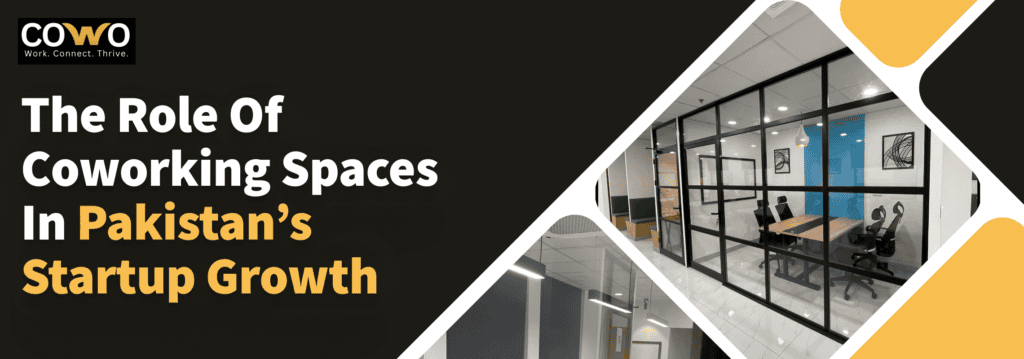
The Role of Coworking Spaces in Pakistan’s Startup Growth
Starting a company has always required more than just a good idea. Behind every successful startup is a combination of talent, resources, timing, and the right environment that allows founders to turn their ideas into real businesses.
For many entrepreneurs in Pakistan, one of the first challenges is not building the product or finding customers. It is finding the right place to work.
In the past, starting a business often meant renting a traditional office, purchasing furniture, setting up internet connections, and taking on long-term expenses before the company had even generated revenue. This approach worked for established businesses, but it created unnecessary pressure for early-stage startups that were still testing their ideas and searching for market opportunities.
The growth of coworking spaces has changed this approach. Instead of investing heavily in office infrastructure, startups can now access professional work environments, meeting spaces, and business communities without taking on large upfront costs.
The importance of coworking spaces goes beyond providing desks and internet connections. They have become part of the wider startup infrastructure by creating places where founders, freelancers, developers, designers, and business professionals can work together, exchange knowledge, and build valuable relationships.
Pakistan’s startup ecosystem has experienced major changes over the last decade. The rise of technology companies, digital services, freelancing, and remote work has created demand for flexible workplaces that support modern businesses.
Coworking spaces have become one of the supporting elements helping entrepreneurs move from ideas to execution.
Pakistan’s Startup Ecosystem Is Entering a New Phase
Pakistan has one of the largest young populations in the world, creating a strong foundation for entrepreneurship and digital businesses. The country has a population of more than 240 million people, with around two-thirds of the population below the age of 30.
This young workforce has contributed to the growth of technology-driven businesses across industries such as fintech, e-commerce, logistics, healthcare technology, education technology, and software services.
Over the past few years, Pakistan gained international attention because of the growth of startups solving local problems through technology. Companies such as Airlift, Bazaar Technologies, PostEx, and SadaPay showed that Pakistani founders could build companies targeting large markets and attracting global interest.
The startup ecosystem experienced a major growth period during 2021 and 2022, when Pakistani startups raised hundreds of millions of dollars from local and international investors. According to industry reports, startups raised approximately $365 million in 2021 and around $355 million in 2022.
However, the global venture capital slowdown after 2022 affected startup funding worldwide, including Pakistan. The market shifted from rapid expansion toward sustainable growth, stronger business models, and efficient operations.
This change highlighted an important reality: startups need more than funding to survive.
A founder may receive investment, but they still need access to skilled people, professional networks, mentorship, and practical infrastructure. A strong startup ecosystem is built through the combination of capital, talent, communities, and environments where entrepreneurs can work effectively.
This is where coworking spaces became increasingly important.
Why Pakistan Needed a New Approach to Workspaces
Traditional offices were designed for companies with predictable structures. A business would rent a space, hire employees, and operate from the same location for years.
Startups work differently.
A new company may begin with two founders and a basic idea. After finding customers, it may need to hire more employees. It may change its product direction after receiving market feedback. It may grow quickly or need to reduce expenses during difficult periods.
Because of this uncertainty, startups need flexibility.
For an early-stage company, spending heavily on office infrastructure can become a distraction. Money that could be used for product development, marketing, or hiring is often spent on rent, furniture, maintenance, and administrative tasks.
Coworking spaces provide a different model.
They allow founders to access professional environments without carrying the full responsibility of running an office. A small startup can begin with a few seats, use meeting rooms when needed, and expand its workspace as the team grows.
This flexibility is especially valuable in Pakistan, where many startups begin with small teams and limited resources.
A founder building a software product does not necessarily need a large office on the first day. They need a reliable environment where they can focus, collaborate, meet potential partners, and continue improving their business.
The Evolution From Freelancers to Startup Founders
The growth of Pakistan’s digital economy has created a new pathway for entrepreneurship.
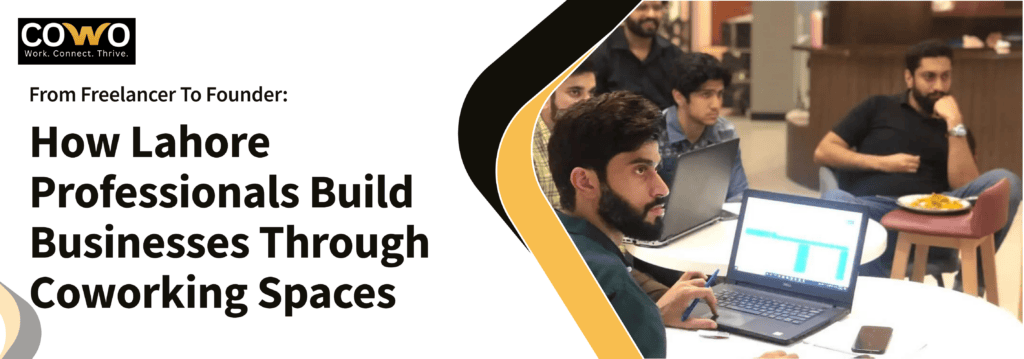
Many professionals begin their careers as freelancers, offering services such as software development, graphic design, digital marketing, content creation, and consulting to clients locally and internationally.
For many, freelancing becomes the first step toward building a larger business.
A person may start by working alone, then take on more projects, hire other professionals, and eventually create a company.
However, moving from freelancer to founder requires more than additional work.
It requires a business environment.
An individual working from home may be productive, but growing teams need spaces where they can collaborate, meet clients, and build a professional identity.
This is where coworking spaces provide value. They create a bridge between independent work and structured businesses by offering flexible workplaces and access to professional communities.
A developer may meet a designer who becomes a business partner. A marketing specialist may connect with a startup that needs help growing. A freelancer may find the resources needed to build a small agency.
The growth of coworking spaces in Pakistan reflects this changing work culture, where entrepreneurs are looking for more than a physical office. They are looking for environments that support collaboration, networking, and long-term business growth.
Coworking Spaces Are Becoming Part of Startup Infrastructure
The real value of coworking spaces is not only the workspace itself. It is the ecosystem that develops around it.
Building a startup can be challenging, especially for first-time founders. Many entrepreneurs face similar problems: finding the right talent, understanding customers, improving their business model, and connecting with experienced people.
A strong coworking environment creates opportunities for these challenges to be solved through community.
When founders work around other entrepreneurs, they gain access to different experiences and perspectives. A startup founder can learn from someone who has already hired a team, launched a product, or raised investment.
These interactions may seem small, but they often become valuable over time.
For Pakistan’s startup ecosystem, where many entrepreneurs are creating businesses for the first time, these connections help reduce the learning curve and make entrepreneurship more accessible.
How Coworking Spaces Support Startup Growth Beyond Office Space
For startups, growth depends on more than having a place to work. Founders need access to people, knowledge, and opportunities that help them make better decisions.
This is where coworking spaces create value.
A startup founder working alone may spend weeks trying to solve a problem related to hiring, marketing, product development, or business strategy. In a shared environment, that same founder may find someone nearby who has already faced a similar challenge.
This exchange of knowledge is one of the biggest advantages of coworking spaces.
Unlike traditional offices, where employees usually belong to the same company, coworking spaces bring together people from different industries and backgrounds. A single environment can include software developers, designers, consultants, freelancers, startup founders, and small business owners.
These connections create opportunities for collaboration.
A technology startup may find a marketing professional who understands customer acquisition. A founder may discover a potential business partner. A freelancer may meet someone who helps them move toward building a company.
For early-stage businesses, these relationships can be as valuable as the workspace itself.
The Role of Coworking Spaces in Pakistan’s Major Startup Cities
Pakistan’s startup activity is mainly concentrated in Karachi, Lahore, and Islamabad. These cities have developed stronger entrepreneurial communities because of their access to technology talent, universities, investors, and business networks.
Each city contributes differently to Pakistan’s startup landscape.
Karachi: The Business Center Driving Commercial Growth
Karachi has historically been Pakistan’s largest commercial hub. The city has a strong presence of financial institutions, technology companies, large businesses, and investors.
This makes Karachi an important location for startups looking to access customers, partnerships, and funding opportunities.
However, operating in a major business city also comes with challenges. Commercial rents and office expenses can be difficult for early-stage companies, especially when they are still validating their ideas.
Coworking spaces provide startups with access to professional locations without requiring them to take on the full cost of maintaining a traditional office.
For a young company, this flexibility can be important. A startup may not need a permanent office for a large team, but it may still need a professional environment for investor meetings, client discussions, and team collaboration.
Lahore: A Growing Technology and Innovation Hub
Lahore has become one of Pakistan’s strongest technology and startup centers.
The city benefits from a large pool of software developers, engineering graduates, creative professionals, and young entrepreneurs. Universities and technology communities have played an important role in encouraging students and professionals to explore entrepreneurship.
Programs such as Plan9 and the National Incubation Center Lahore have supported early-stage founders by providing mentorship, training, and startup resources.
Lahore’s startup culture has grown around technology, software services, and digital businesses. Many founders begin with a small idea, build an initial product, and gradually move toward creating companies.
For these entrepreneurs, coworking spaces provide an environment where they can work professionally while connecting with other people who understand the startup journey.
A student building a technology project may eventually need a designer, a business partner, or advice on launching the product. Being part of a startup community makes these connections easier.
Islamabad: Technology, Research, and Entrepreneurial Communities
Islamabad has developed a growing startup ecosystem supported by technology professionals, universities, and innovation-focused organizations.
The city has produced startups in areas such as software development, artificial intelligence, education technology, and digital services.
Compared with Karachi and Lahore, Islamabad has a smaller business market, but it has strong connections between technology talent, research institutions, and innovation programs.
Coworking spaces support this environment by giving entrepreneurs a place to collaborate and build relationships.
For many founders, especially those outside traditional business networks, access to a professional community can make the difference between working alone and becoming part of a larger entrepreneurial ecosystem.
The Connection Between Coworking Spaces and Startup Support Programs
Coworking spaces are only one part of Pakistan’s wider startup support system.
Over the years, Pakistan has developed several initiatives focused on helping entrepreneurs, including incubators, accelerators, and technology programs.
The National Incubation Center network, supported by Ignite National Technology Fund, has played an important role in developing startup communities across different cities. These programs provide founders with mentorship, training, networking opportunities, and business guidance.
The relationship between startup programs and coworking environments is important because founders need both knowledge and infrastructure.
An entrepreneur may have a strong technical idea but lack business experience. Another founder may understand a market opportunity but need access to talent and professional networks.
A connected environment helps solve these gaps.
Coworking spaces contribute by creating places where entrepreneurs can meet, learn, and collaborate.
Helping Startups Prepare for Growth and Investment
Investment is an important part of startup growth, but funding alone does not determine success.
Investors usually evaluate several factors before supporting a company, including:
- The founding team
- Market opportunity
- Business model
- Customer understanding
- Ability to execute
Coworking spaces can indirectly help founders become better prepared for these opportunities.
Being surrounded by other entrepreneurs exposes founders to different experiences. They may learn how other companies approach fundraising, hiring, customer acquisition, and business planning.
For example, a founder preparing for an investor meeting may receive feedback from other entrepreneurs before presenting. A startup team developing a product may discover weaknesses through conversations with people from different industries.
These interactions help founders improve their decisions.
Coworking spaces do not create successful startups by themselves, but they provide an environment where entrepreneurs can learn faster and build stronger businesses.
How Coworking Supports Remote Work and Global Opportunities
The growth of remote work has changed how businesses operate around the world.
Many technology companies no longer require employees to work from a traditional office every day. Teams can now collaborate across different cities and countries.
Pakistan has benefited from this shift because many professionals work with international companies and clients.
However, remote work also creates challenges.
Working from home may become difficult because of distractions, limited professional space, or lack of separation between personal and professional life.
Coworking spaces provide an alternative.
They give remote workers and small teams access to:
- Reliable working environments
- Meeting facilities
- Professional settings for client interactions
- Opportunities to connect with other professionals
For a Pakistani software company working with international clients, having access to a professional workspace can help improve communication, productivity, and credibility.
The Changing Mindset of Pakistani Entrepreneurs
One of the biggest changes in Pakistan’s startup culture is how entrepreneurs think about business infrastructure.
In the past, having a large office was often seen as a sign of success.
Today, many founders think differently.
They focus more on efficiency, flexibility, and using resources where they create the most value.
A startup’s success is not determined by the size of its office. It depends on the quality of its product, understanding of customers, strength of the team, and ability to execute.
Coworking spaces represent this new approach.
They allow founders to build professionally without spending unnecessary resources on infrastructure before the business requires it.
For many early-stage startups, the right environment is not the most expensive one. It is the one that helps them move faster, learn quicker, and connect with the right people.
Challenges Facing Coworking Spaces in Pakistan
Although coworking spaces have become an important part of Pakistan’s startup environment, they are not a complete solution to every challenge entrepreneurs face.
A workspace can provide infrastructure, flexibility, and opportunities to connect with others, but it cannot replace the core elements required to build a successful company.
A startup still needs a strong idea, a clear understanding of customers, a capable team, and the ability to execute consistently.
One of the biggest challenges for coworking spaces in Pakistan is creating real value beyond providing a physical location.
A basic shared office with desks and internet solves only one problem. Modern entrepreneurs need more than that. They need communities where they can learn from others, find potential partners, attend useful events, and access people with relevant experience.
The difference between an ordinary workspace and a valuable startup environment is the strength of its community.
Another challenge is that coworking culture is still developing in many parts of Pakistan. Most startup activity remains concentrated in major cities such as Karachi, Lahore, and Islamabad. Entrepreneurs in smaller cities often have fewer opportunities to access professional workspaces, startup networks, and business support systems.
As digital businesses continue growing, expanding these opportunities beyond major urban centers will become increasingly important.
The Future of Coworking Spaces in Pakistan
The future of coworking spaces in Pakistan will be closely connected with the growth of entrepreneurship, remote work, and digital businesses.
The traditional idea of a workplace is changing.
Companies no longer always need large permanent offices. Many businesses now operate with distributed teams, remote employees, and flexible working arrangements.
This shift creates new opportunities for coworking spaces.
In the coming years, coworking spaces are likely to become more specialized. Instead of only offering general office facilities, many will focus on specific communities such as technology startups, creative professionals, freelancers, and remote teams.
This specialization can create stronger business networks.
For example, a technology-focused workspace can bring together software developers, product managers, designers, and technology founders. A creative workspace can connect photographers, marketers, designers, and content creators.
When people with similar interests and challenges work together, collaboration becomes more natural.
Pakistan’s growing digital economy will also continue influencing demand for flexible workplaces. As more people build online businesses and work with international clients, they will need professional environments that provide both independence and community.
Coworking Spaces and the Next Generation of Pakistani Entrepreneurs
One of the most important contributions of coworking spaces is that they make entrepreneurship feel more accessible.
Starting a company can feel overwhelming, especially for first-time founders.
Many entrepreneurs begin without business experience, industry connections, or access to established networks.
A supportive environment can reduce these barriers.
A young developer with a product idea may find a business partner. A freelancer may learn how to build an agency. A small startup team may discover mentors who can help them avoid common mistakes.
These opportunities may not guarantee success, but they increase the chances that good ideas receive the support needed to develop.
Pakistan has a large population of young professionals entering the workforce every year. Creating environments where these individuals can experiment, collaborate, and build businesses will be important for the country’s economic future.
Frequently Asked Questions
1- Are coworking spaces useful for startups in Pakistan?
Yes, coworking spaces can be useful for startups because they provide affordable access to professional infrastructure, flexible working arrangements, and business communities. They are especially valuable for early-stage companies that want to avoid large office expenses while they are still growing.
2- Why do startups choose coworking spaces instead of traditional offices?
Many startups choose coworking spaces because they offer flexibility. Founders can start with a small workspace, avoid major setup costs, and increase their space as the company grows. This allows them to invest more resources into product development, hiring, and customer acquisition.
3- Which cities in Pakistan have the strongest coworking and startup communities?
Karachi, Lahore, and Islamabad currently have the most developed startup ecosystems because of their access to technology talent, investors, universities, and business networks.
Karachi has a strong commercial environment, Lahore has a large technology and talent base, and Islamabad has a growing innovation and technology community.
4- Can freelancers benefit from coworking spaces?
Yes. Freelancers often use coworking spaces to create a professional working environment, meet clients, collaborate with other professionals, and transition from individual work toward building agencies or businesses.
5- Do coworking spaces guarantee startup success?
No. A coworking space cannot replace a strong business idea, effective execution, market understanding, or funding. Its role is to provide an environment where entrepreneurs can work more effectively, build relationships, and access opportunities.
Conclusion: Why Coworking Spaces Matter for Pakistan’s Startup Future
Pakistan’s startup growth is being driven by ambitious founders, digital talent, technology adoption, and increasing interest in entrepreneurship.
However, startups do not grow through ideas alone.
They require supportive environments where people can build, collaborate, learn, and connect with opportunities.
Coworking spaces have become an important part of this environment by reducing early operational challenges and creating communities around entrepreneurship.
For many founders, the biggest challenge is not only finding an idea. It is finding the right conditions to turn that idea into a sustainable business.
A flexible workspace gives entrepreneurs the ability to start small, manage costs, meet the right people, and focus on building products that solve real problems.
The future of Pakistan’s startup ecosystem will depend on many factors, including investment, talent development, government support, and market opportunities. Coworking spaces are one supporting element within this larger system, but their role is becoming increasingly important.
As more Pakistanis choose entrepreneurship, freelancing, and digital businesses, the need for flexible and collaborative work environments will continue to grow.
The companies of tomorrow may not begin in large corporate offices. Many may start with small teams, shared spaces, and communities that help founders transform ideas into businesses.